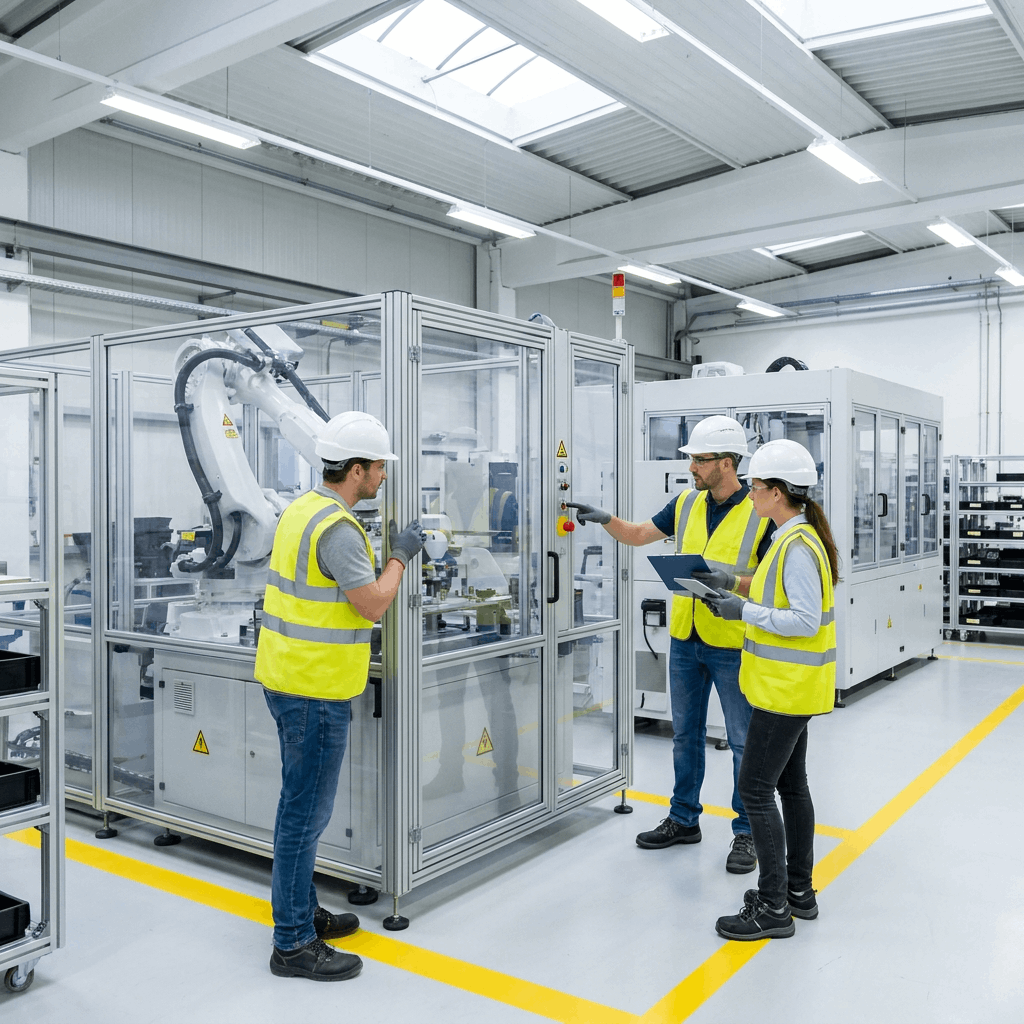
Ensuring machinery safety is one of the most important responsibilities for manufacturers, designers, and industrial organizations. At ITL, we help businesses identify hazards, reduce risks, and achieve compliance with international safety standards through professional testing, inspection, and certification services. A structured approach to EN ISO 12100 enables organizations to develop safer machines while meeting regulatory expectations and improving overall product quality.
Understanding EN ISO 12100
EN ISO 12100 is the internationally recognized standard that provides the principles and methodology for risk assessment and risk reduction in machinery. Rather than prescribing technical solutions, the standard establishes a systematic framework for identifying hazards, evaluating risks, and implementing appropriate protective measures throughout the machine’s lifecycle.
The standard applies to a wide range of machinery across different industries and is often used alongside other harmonized standards that address specific machine types or safety functions. By following its methodology, manufacturers can demonstrate that safety has been considered from the earliest design stages through installation, operation, maintenance, and eventual decommissioning.
The Importance of Risk Assessment for Machinery
A comprehensive risk assessment machinery process helps organizations identify potential hazards before equipment reaches the market or enters operation. This proactive approach minimizes workplace accidents, reduces liability, improves product reliability, and supports compliance with applicable regulations.
Hazards may include mechanical, electrical, thermal, ergonomic, noise-related, or operational risks. Each identified hazard should be carefully evaluated by considering the severity of possible harm, the likelihood of occurrence, and the potential exposure of users or maintenance personnel.
By performing a detailed assessment early in the design process, costly modifications can often be avoided later while ensuring that safety remains an integral part of the final product.
The Risk Assessment Process
The methodology described in the standard follows a logical sequence. We begin by defining the intended use of the machinery, including any reasonably foreseeable misuse. Next, we identify all potential hazards throughout every phase of the machine’s lifecycle.
Once hazards have been identified, each risk is evaluated to determine whether additional protective measures are required. When risks cannot be eliminated through inherently safe design, safeguarding solutions, protective devices, warning information, or operational instructions are implemented to reduce the remaining risks to an acceptable level.
Finally, the assessment is reviewed to verify that all identified risks have been adequately addressed and documented.
Documentation and Continuous Improvement
Proper documentation is an essential part of every risk assessment machinery project. Maintaining detailed records demonstrates compliance, supports future design updates, and provides valuable information during audits or certification processes.
Risk assessment should not be viewed as a one-time activity. Whenever machinery is modified, new technologies are introduced, or operating conditions change, the assessment should be reviewed and updated accordingly.
How ITL Supports Your Compliance Journey
At ITL, we guide manufacturers through every stage of machinery safety evaluation, from hazard identification and risk analysis to testing, certification, and regulatory compliance. Our experienced specialists work closely with customers to ensure that every assessment is practical, thorough, and aligned with international standards.
Whether you are developing new equipment or updating existing machinery, our expertise helps simplify the compliance process while improving product safety and market readiness. Contact ITL today to learn how our professional machinery safety services can support your next project with confidence.